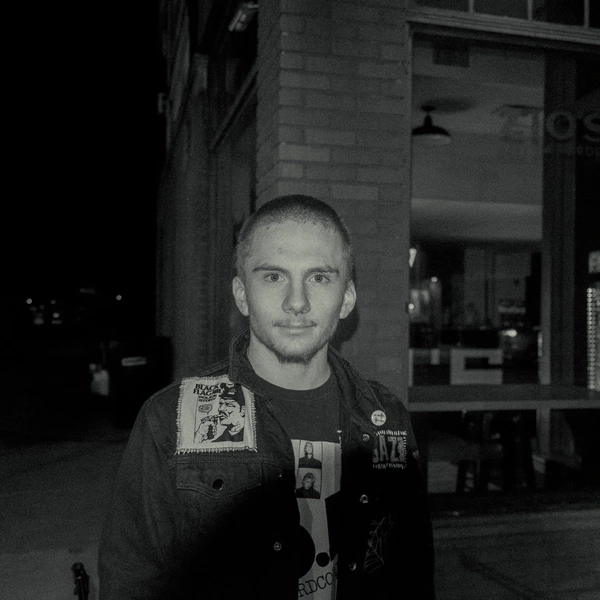
Artist Bio: Max Badgley is an up and coming Western NY concert photographer. I cornered Max after a speech he gave in a public speaking class we had together. He spoke within this speech on his love for the hardcore scene and photography, and goddamnit, I had a gut feeling about this guy. I basically interrogated him about his taste in music, and after a few minutes of that and questioning about his photography, I encouraged him to follow Last Call (local Fredonia booking agency), and the people who run it, on Instagram. Since then, not only has he continued his normal show photography around Buffalo, but he has photographed several BJ’s shows, as well as a show at The Toybox.
Charlie – Tell me a bit about your background in photography! How did you get into it?
Max – Well, there are kind of two answers to that; how I discovered photography and then why I started doing photography. My Dad is a professional photographer, and has been for 20 or so years , so I always thought that was pretty cool. He mostly did weddings and portraits and stuff. I went with him and watched him do it and even when I was little I thought it was a really cool thing. That was kinda my introduction to it. But, weirdly enough, I got into doing photography myself through this video game called Forza, it’s a racing video game. This is when I was like, I dunno, fifteen, fourteen maybe? Anyway, there’s a photo mode, and you can take pictures of the cars in the game. I dunno how I went from that to concert photography – well, I do, but yeah.
Charlie – So, how did you get into concert photography, specifically?
Max – Well, I mean, I’ve been into punk and hardcore for forever, I was pretty much born into it. Like, I’m named after a punk song. So, I’ve been going to shows since I was little. And, y’know, there’s a part of me where I can’t just like go to shows, I want to be a part of things that I’m involved in. I tried doing the whole band thing with my friends and it wasn’t the thing I wanted to do, so I thought, photography. I’m doing photography, why not?
Charlie – I totally get that, yeah. There are so many more elements to a show than just the bands on stage. Somebody has to put them up there (hint hint, to an upcoming interview). Anyway, like you just said, you’re a part of the hardcore scene, you typically tend to photograph hardcore shows, how do the aesthetics of that subculture affect your work?
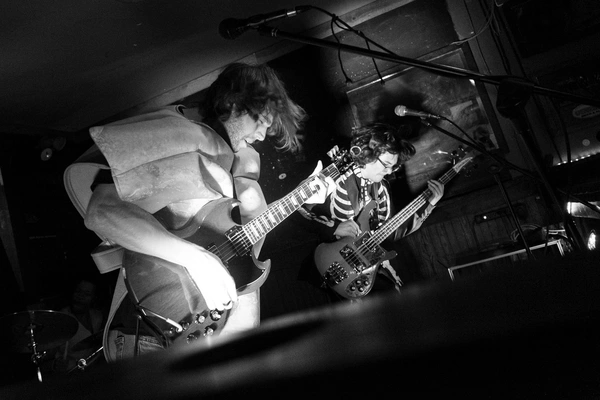
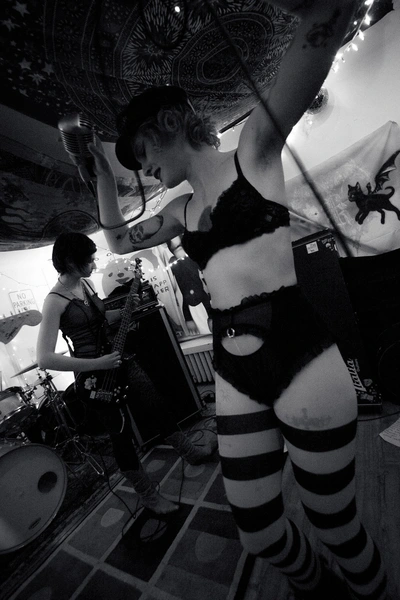
Max – In terms of my work, personally, I look to stuff from the 70s and 80s. Y’know, these guys were shooting on Film SLRs. Back in the day you couldn’t get high speed films, they had to use flash, so like flash, hard shadows, and that kind of contrast, that’s where I get my style from. Big, wide angles, as well. Glen E. Friedmen, he photographed Black Flag, he toured with them, and Minor Threat, I get a lot of inspiration from him. He’s definitely my biggest inspiration.
Charlie – Your Intsagram Bio says you’re a “black and white specialist”. What goes into being a black and white specialist?
Max – It is a science, black and white is a science. You can’t just go on Lightroom and click that black and white slider, it’s not that. It’s taken me many many photos of fine tuning it and tweaking it and being inspired by other peoples black and whites. A lot of it also comes from the fact that I am a little bit lazy and don’t like editing in color. Color theory and all that kind of slips away from me. And I just prefer black and white.
Charlie – I feel the same way! Lot of people encourage me, with my drawings and stuff, to include more color, and I’m always like “NOOOO! I don’t want to!”
Max – It also gives things a little bit of a timeless feel. Especially with color, there are certain trends that come up in photography, and I don’t want my work to look of a specific time. I want it to look like “Oh, these are photographs of shows!”.
Charlie – Totally. Alright, tell us some of your favorite show memories!
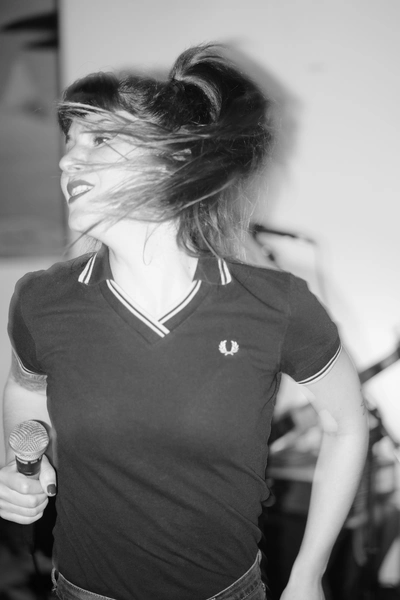
Max – I don’t know if this is a good one, but it was the Buffalo Hardcore Homecoming show, and there were like seven or eight bands at the Amvets, it was packed. I can’t remember who was playing, but I was right up front. Certain hardcore scenes can get a little clicky, and if somebody doesn’t immediately recognize you as part of that, they might, y’know [be unfriendly]. So, I was up front. Maybe getting in the way a little bit, y’know not intentionally, and this guy comes around the corner, puts me in a chokehold, and slams me onto the table. It broke my camera screen. Yeah, so, you gotta be vigilant.
Shortly after our interview, Max sent me another story he wanted me to include to show the brighter side of the Hardcore scene. He wants readers to know that through being involved in your local punk scene, you can meet and interact with awesome people who never would have otherwise. Here’s the story:
The first show I ever photographed was of the French band Cran, at Amy’s Place. In between sets me and my buddies saw them smoking outside the venue and asked them to borrow a lighter. They responded “We don’t smoke”. Which we thought was pretty funny. We ended up talking to them for a while and they were all very cool people.
Charlie – That definitely flows well into my next question, how do you protect your gear in a mosh pit?
Max – Like I said, be vigilant. I asked my Dad to come with me to photograph a show at Mohawk Place, and it was hardcore bands. He’s very old school. He’s photographed big shows in a photo pit and all that, so he’s up front lookin through his viewfinder, and even he got clocked in the head a few times. You gotta understand that it’s not about you, it’s about the band. People aren’t looking out for you. So, stay out of people’s way and just keep your head on a swivel, don’t get tunnel vision. If you have really expensive gear, get it insured, or make sure you have enough money to go out and buy it again tomorrow.
Charlie – We talked a bit about how you’re more inclined to take black and white photos, but sometimes you do use color. What determines whether you shoot color vs B&W?
Max – I used to do pure black and white for shows and that was it, then once bands started reaching out to me to do their photos a lot of the time they would ask me “Hey, could you throw some color in there?”. Now I’ll do a bit of both. Like, I’ll edit the same photo in color and black and white and send it over. Just for some versatility. People like color, but it’s not my specialty, obviously [laughter].
Charlie – I’d like to point out that in addition to your show photography, you do some beautiful landscape work. I really admire it, it’s gorgeous. Is there any overlap between the techniques you use for show photography with landscape photography?
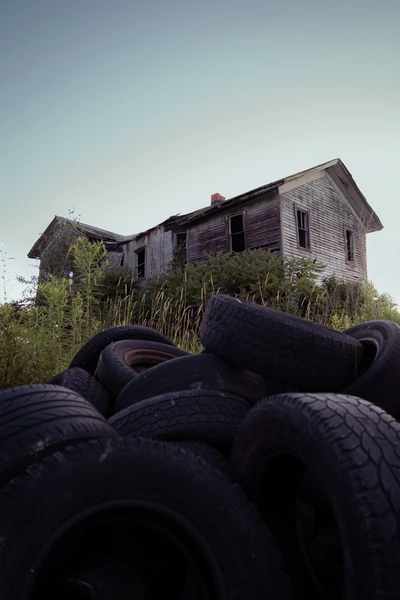
Max – Similarities? Um, I don’t know, they’re pretty different. At a show, I’m gonna have my camera on a burst mode, I’m firing as many photos as I can, just trying to get the picture for the band. But, what I really love about photography, and where a lot of my passion comes from, is just going to a place like the abandoned farmhouse, for example, and just slowing down. Walking around, seeing different compositions, thinking about how I might edit the picture, trying different exposure, y’know. And that’s absolutely not anything you can do at a punk show, you can’t slow down there. But yeah, I would say I keep my editing style pretty similar between the two.
Charlie – This question might be a little out there, but bear with me. I find that a lot of photographers seem to have an inclination towards capturing abandoned places, and to document vast desolation. Why do you think this is?
Max – I think a lot of photographers want to create art about things you might not see everyday. I mean, you got an abandoned building, and you have a normal house on a street, what would somebody rather look at? I don’t know, there’s just something beautiful about an old abandoned house that has a story to tell. And it’s just fun to photograph.
Charlie – Do you ever feel like that type of spot [abandoned buildings] is just asking you to take a picture of it?
Max – Yes! Because you don’t want anyone to forget it. Y’know they might not be there forever. If they’re abandoned, they’re rotting away, someone’s gonna come and demolish it. Then it won’t be able to be seen in all of its beauty.
Charlie – Alright, let’s get to my big meaty question of this interview. I’d just like you to speak for a minutes about the intersection between documentarianism and artfulness when it comes to show photography.
Max – Documentation and artistry both play equally important roles in all photography, especially in show photography, but it’s changed over time. So, say in the early 80s, in the LA hardcore scene; thank god some kid showed up with his camera and took photos of the show, because if not, we wouldn’t have anything from it. Videos of those shows are pretty scarce. But nowadays, everybody carries a camera with them, everybody has a phone. I’ve been to hardcore shows where people have full cinema rigs, and they’re filming these shows. So now, that artistic element is a little more important. Those people with their iphones, and their video cameras, they can show you exactly what went down, but an artist’s skill is to be able to show what it felt like to be there. With my pictures, I’m trying to convey a feeling.
Charlie – You use a fisheye lens sometimes, is that part of trying to emulate that feeling?
Max – Yeah! In a way, yeah. I mean, when you’re in a pit and you’ve got elbows flying at your face, and there’s disorienting loud music going on, you might get that kind of tunnel vision fisheye lens feeling.
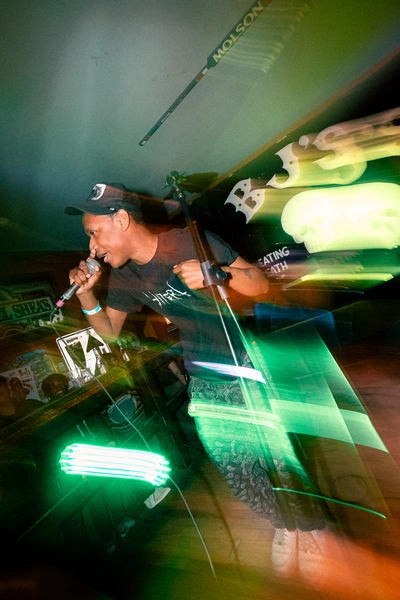
Charlie – You recently photographed a rap show at BJ’s. That seems a little out of your typical genre, what was that like?
Max – It took me a bit out of my comfort zone at first. There’s a little bit of a formula at a punk show, you have an idea of what those guys are going to do. With the rap show – I had never been to anything like that, so I didn’t know what to expect, but, once they got on stage, they had amazing energy, it was an amazing show, just a really good time through and through. It doesn’t matter the genre, as long as an act can give me energy; move around, interact with the crowd, I’ll be able to get good photos. They brought all of that to the table. Very fun to photograph.
Charlie – You also recently photographed a sorta kinda indie show at The Toybox. Have you ever taken photos at a house venue like that? What was it like?
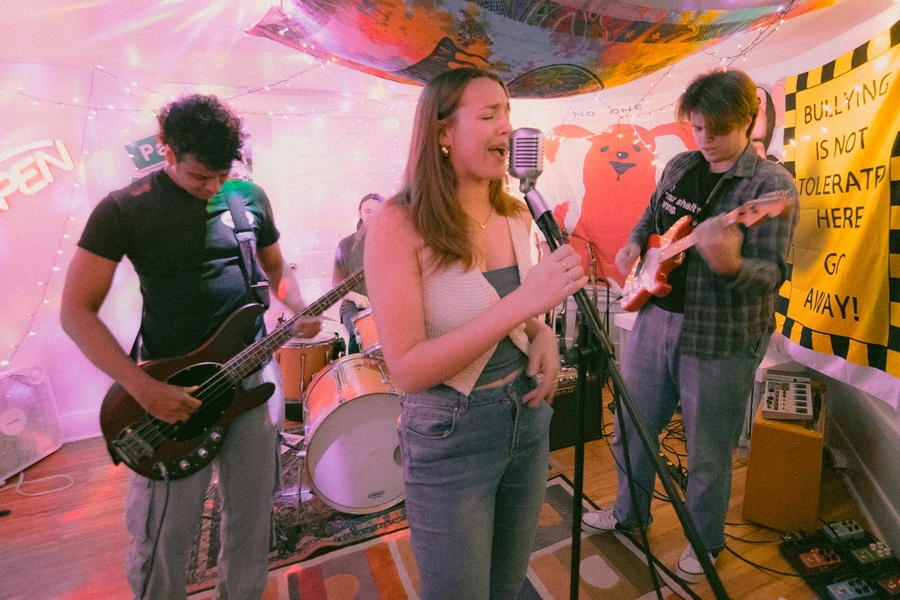
Max – The Toybox? Oh, that was amazing. No, aside from the house shows that me and my friends had put on with our little bands, I had never really been to one like that. That was one of the most intimate shows I’ve ever been to. I mean, people are right there, bands are right there. Super fun to photograph, the bands were amazing. It was a little challenging to photograph in there, it was a little dark, and I was so close to them. But it was a great time.